Book Online Consultation


Narayana Multispeciality Hospital, HSR is a premier centre for gastroenterology care and combines some of the most experienced and skilled gastroenterologists and gastro surgeons in the region with world-class facilities to provide comprehensive care.
By clicking Submit, I agree to have read & understood the Terms & Conditions and Privacy Policy of Narayana Health & give my consent to contact me.
NMH, HSR Layout is designed to meet the national and international healthcare standards and is committed to providing quality medical care and excellent patient service.
The facility brings together an expert team of medical and surgical gastro experts who work together with a compassionate nursing staff to provide patients accurate diagnosis and medical care.
The hospital has high-end technological infrastructure and medical facilities that allow safer, better, and comprehensive medical care.
At Narayana Health, we always strive to provide the best possible medical treatment to our patient aiming to achieve the highest possible success rate.

Appendicitis occurs when the lumen of your appendix is blocked. Appendicitis may be caused by various infections such as virus, bacteria, or parasites, in your digestive tract. Or it may even happen when the opening that joins your large intestine and appendix is blocked or trapped by stool. Sometimes tumors can also cause appendicitis by blockage.
The appendix then becomes sore and swollen. The blood supply to the appendix decreases as the swelling and soreness get worse. Without enough blood flow, the appendix starts to die. The appendix can burst or develop holes or tears in its walls, which allows stool, mucus, and infection to leak through and it get inside the belly. This results peritonitis, a serious infection.
The following are common symptoms of appendicitis. Your own symptoms may vary.
Pain in the abdomen is the most common symptom. This pain:
Other common symptoms include:
Appendicitis symptoms may look like other health problems. Always see your healthcare provider to be sure.
Appendicitis is a surgical emergency. It is lighter likely mode of burst and cause a serious, deadly infection. For this reason, in almost all situations, your healthcare provider will advise that you have surgery to remove your appendix.
The appendix may be removed in an open procedure or using laparoscopy:
Open (traditional) surgery method-
You are given anesthesia. A cut (incision) is made in the lower right-hand side of your belly. The surgeon finds the appendix and takes it out. If the appendix has burst, a small tube (shunt) may be placed to drain out pus and other fluids in the belly. The drain will be taken out in a few days, when your surgeon feels the infection has gone away.
Laparoscopic method-
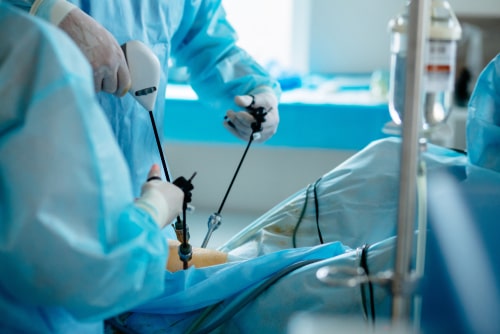
You are given anesthesia. This surgery uses several small cuts (incisions) and a camera (laparoscope) to look inside your belly. The surgical tools are placed through a few small incisions. The laparoscope is placed through another incision. A laparoscopy can often be done even if the appendix has burst.
If your appendix has not burst then your recovery from an appendectomy will only take a few days. If your appendix has burst, your recovery time will be longer and you will need antibiotic medicine.
You can live a normal life without your appendix. Changes in diet or exercise are usually not needed.
Umbilical hernia-
Umbilical hernia repair surgery is a procedure that fixes umbilical hernias. An umbilical hernia means a bulge or pouch at umbilical. This type of bulge occurs when a section of the intestine or other abdominal cavity tissue pushes through a weak spot in the abdominal wall near the belly button. It can develop in young children and adults.
In fens cases, adults with umbilical hernias can develop a serious condition called strangulation of bowel. Strangulation occurs when the blood flow to the herniated tissue is suddenly cut off. This can occur in umbilical hernias that are non-reducible, or can’t be pushed back into abdominal cavity.
Symptoms of strangulation include nausea, vomiting, and severe pain. The area around the umbilical hernia might look blue, as if you have a bruise. The herniated contents could also become nonfunctional and die if they’re strangulated.
Umbilical hernias always require surgical repair. To prevent of umbilical in future.Causes pain, is larger than half an inch, is strangulated.
Umbilical hernias are fairly common among infants. The umbilical cord passes through an opening in the baby’s abdominal muscles during pregnancy. The opening usually closes right after birth. If it doesn’t close all the way, a weak spot will be layout umbilical. This makes them more susceptible to an umbilical hernia.
In infants-
When an umbilical hernia develops at birth, it may push the belly button out. Umbilical hernias in newborns will almost always heal without surgery. However, your doctor may recommend surgery if:
In adults
Umbilical hernias in adults may occur as a result of:
Cholecystectomy-
A cholecystectomy is surgery to remove your gallbladder.
The gallbladder is a small organ under your liver. It is on the upper right side of your belly or abdomen. The gallbladder stores a digestive juice called bile which is made in the liver.
There are 2 types of surgery to remove the gallbladder:
Why might I need a cholecystectomy?
A cholecystectomy may be done if your gallbladder:
Gallbladder problems may cause pain which:
Inguinal Hernia-
An inguinal hernia may arise at any time from infancy to adulthood. However, it is far more common in males with a lifetime risk of 27% in men and 3% in women. Some individuals are born with weak abdominal muscles and are more likely to develop a hernia. Others are caused by excessive strain on the abdominal wall from heavy lifting, weight gain, coughing, or difficulty with bowel movements and urination.
Signs and Symptoms-
Symptoms of an inguinal hernia include:
Any activity or condition which increases pressure in the intra-abdominal cavity may contribute to the formation of a hernia, including:
Founded in 2000, Narayana Health is one of India’s largest hospital groups with hospitals and heart centres across the country and an international hospital in the Cayman Islands. The group’s facilities provide advanced healthcare in over 30 medical specialities to both adults and children.