The Centre of Nephrology and Urology has a sizable and comprehensive Renal Transplant Program, having performed both autologous and cadaveric transplants. The Centres also perform minimally invasive surgery for renal donors, thereby minimizing post-operative recovery time and hospitalization.
What are the two kinds of transplants?
Kidneys for transplant may come from a person who has died (a deceased donor) or from a healthy living person like a family member or spouse who offers to donate a kidney (a living donor).
Who is a candidate for kidney transplantation?
Kidney transplantation is the treatment of choice for people with kidney failure. This allows patients to stop dialysis, decrease their fluid and diet restrictions, and enjoy a much better quality of life.
Who cannot get a kidney transplant?
Many patients assume they are too old for transplant but if you are otherwise healthy, age is not a factor in determining your transplant eligibility. However, there are some other conditions that prevent patients from getting a kidney transplant, like:
- Recent cancer (other than most skin cancers)
- Uncorrectable heart disease
- Untreatable psychiatric illness
- Active substance abuse (alcohol or drugs)
You and your transplant doctor will discuss your eligibility during the transplant evaluation process.
What are the requirements to become a living donor?
Generally, donors should be between the age group of 18 to 65 years and must be in good health and free from diabetes, high blood pressure, cancer, kidney or heart disease. You should not have any major medical or psychiatric illness and you must not be pregnant. You should not be overweight, although you may still be a potential donor if you lose weight. If you smoke, you must quit for six weeks prior to surgery. You also must understand the risks of this surgery and comply with instructions for follow-up medical care.
How is the Compatibility of the living donor determined?
Know your blood type. You must be either the same blood type as the recipient or blood type ''O''. The Rh factor - positive [+] or negative [ - ] does not determine overall fitness and health of the kidneys. If there is no option for a blood group compatible donor, then the facility for ABO-incompatible through transplant is also available.
How is living donor transplant done?
A prospective living donor has to undergo a detailed pre-transplant evaluation to assess fitness for kidney donation and surgery. Typically, the donor is admitted to the hospital the day before the kidney donation for the necessary tests and once he/she has been accepted as a donor after thorough evaluation, shortly before the operation, an IV line is connected to a vein in the donor's arm for medication and fluid.
A catheter is inserted to drain urine from the bladder. The kidney is removed, and the donor then proceeds to recovery. Several hours after the operation, the donor is encouraged to walk around. The IV and catheter remain in place for a few days; as soon as the donor is able to eat or drink, the IV is removed. Typically, the donor goes home in five to eight days. He or she usually can return to work in about four weeks.
Transplants from living donors usually are more successful because there is a better tissue match. There also is a psychological benefit. The recipient can feel better knowing that the gift came from a loved one, and the donor knows he or she has made a tremendous contribution to the life of the recipient.
What can patients do if they want a transplant but don't have a living donor?
Patients who do not have a living donor can wait on a nationwide list to get a deceased donor transplant.
How does the waiting list work?
The government manages a nationwide kidney transplant waiting list. Patients who want a deceased donor kidney are evaluated by their transplant centre. If a patient is healthy enough for a transplant, the medical information is added to the list. When a donor becomes available, that person's medical information is also added to the list. The computer then matches the kidney with someone on the waiting list based on blood type, how well they match the donor and the length of time on the waiting list.
Is there a difference between having a living or deceased donor transplant?
Yes. Living donor transplants last longer than deceased donor transplant because a living donor kidney is removed from a healthy donor in the operating room and is transplanted right away. Living donor transplants lasts on an average for 15-20 years and deceased donor transplant last for 10-15 years, some transplants have been known to last much longer. lf a transplant fails, a patient can begin or return to dialysis and/or pursue another transplant.
When is the best time to get a transplant?
In general, the sooner you get a kidney transplant, the better. The transplant team and your nephrologists will determine the best time for you.
What happens during transplant surgery?
Shortly before going into surgery, medicine is given to the patients to help them relax. A general anaesthetic is then given. The donor and the recipient are in adjacent operating rooms. The transplant surgeon removes the kidney from the donor and prepares it for transplant into the recipient. There, the surgeon connects the renal artery and vein of the new kidney to the recipient's artery and vein. This creates blood flow through the kidney which makes urine. The ureter, or tube coming down from the donor’s kidney, is sewn into the bladder. Usually, the new kidney will start working right away. Sometimes, it takes several days for the donor kidney to ‘wake up’.
What risks are there for a kidney patient?
It is about the same as any major surgery; surgical complications, infection, fever, bleeding, blood clots, kidney failing in the first year.
How successful are kidney transplant surgeries?
Most transplanted kidneys start working immediately, but some start working slowly, and you may need dialysis for one to three weeks after surgery.
What kind of factors will affect the success of my own transplant?
The success of transplantation is influenced by a number of different factors, some of which are within the control of the patient.
Living donor kidney transplants are on average more successful than transplants from deceased donors. Transplants done relatively soon after starting dialysis are on an average more successful than transplants performed two or more years after a patient starts dialysis. The degree of matching between the donor and the recipient is also important but is less for living donor transplantation. Transplants of kidneys from younger donors tend to survive longer than transplants from older donors. Patients who do not smoke or give up smoking, maintain a good body weight and exercise regularly are more likely to have many years of good quality life with a well-functioning kidney.
Most kidneys that fail in the first year after transplant do so because of rejection. Other causes for graft failure include - obesity, the presence of other significant diseases such as diabetes and heart disease, an overall level of fitness and lifestyle habits like smoking.
What are antibodies and how does rejection occur?
Antibodies are proteins your immune system makes when it comes into contact with something foreign to your body. When you get an infection, such as cold or an infection from a wound, your body makes antibodies to fight that infection.
Antibodies protect your body. When you have an organ transplant, your body reacts as it would to an infection. Thus, your antibodies try to destroy the organ. Some people have a lot of antibodies, and it is harder to find an organ match.
What medications will have to be taken afterwards?
Anti-rejection medications and medications for other health issues (if required) like blood pressure, diabetes, etc. need to be taken after discussing with your nephrologist and transplant doctor.
What would happen if my kidney transplant didn't work? Would I die?
No. If the transplant doesn't work, the nephrologist will investigate in detail any treatable cause for it. You can start or resume dialysis or pursue another transplant.
How long will it be in the hospital?
Patients typically spend 7-8 days in the hospital following kidney transplant surgery.
Can a person live longer with a transplant compared to staying on dialysis?
Yes. A patient who has a transplant generally lives longer than a patient who stays on dialysis. The transplanted kidney works 24 hours a day to remove 50 - 85% of the total waste your body generates. Dialysis on the other hand only removes 15% of total waste and only when on the dialysis machine.
How does a person's quality of life change if they get a transplant?
Most patients say that having a kidney transplant improves the quality of life. Patients say that they feel better and have more energy to spend time with their family, do their hobbies, travel and go back to work. Patients also say they have more time since they do not have to spend hours in treatment with dialysis each week. They are also very satisfied that renal dietary restrictions are removed once the transplant is done.












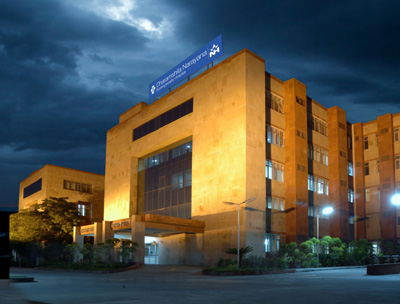 Dharamshila Narayana Superspeciality Hospital is a state-of-the-art multi-superspeciality hospital with world class medical infrastructure and an expert team of highly skilled doctors providing comprehensive medical care in various super specialities such as oncology, bone marrow transplant, emergency medicine and critical care, cardiology and cardiac surgery, neurology and neurosurgery, nephrology, urology and kidney transplant, orthopaedics and joint replacement, etc. The long legacy of trust, more than two decades of experience and innovative treatment approaches have made the hospital a leading and preferred destination for medical treatment in India.
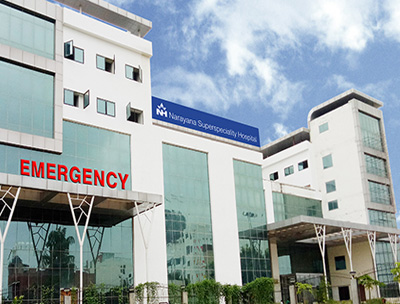 Narayana Superspeciality Hospital, Gurugram is nestled close to DLF Cyber City and the Delhi - Jaipur Highway. It is a world-class medical facility catering to the healthcare needs of the NCR region. Featuring experienced medical professionals and the latest in medical infrastructure, the hospital represents Narayana Health’s commitment to quality medical care and patient service. Narayana Superspeciality Hospital has been built from the ground-up to be a state-of-the-art facility; with expertly planned and well-equipped sections, including a spacious OPD area and comfortable patient rooms which allows the hospital to cater to both In-Patients and Out-Patients in equal measure.